


Does the power cable use highly flexible, bend-resistant wire to accommodate the frequent insertion, removal, and movement of the feeder?
Release Time : 2025-12-04
In modern SMT (Surface Mount Technology) production lines, the efficient operation of the pick-and-place machine relies on the precise coordination of every detail. The feeder, as a key component carrying electronic components and continuously supplying them to the placement head, connects to the power cable, which, though seemingly insignificant, plays a crucial role in ensuring stable power supply and signal transmission. Especially in high-speed, multi-product switching production environments, feeders need to be frequently disassembled, replaced, or repositioned, resulting in repeated bending, pulling, and insertion/removal of the power cable. Therefore, whether or not a highly flexible, bend-resistant specialized wire is used directly determines the continuity of equipment operation and the level of maintenance costs.
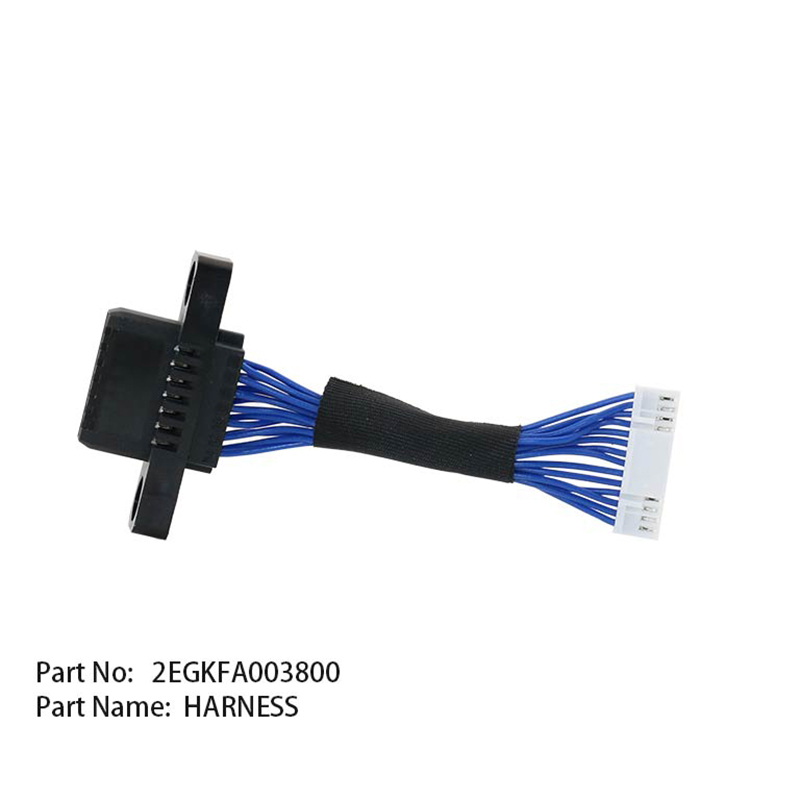
Ordinary power cables typically use a rigid PVC sheath and rigid conductor structure, suitable for fixed installations. However, in SMT workshops, such cables are prone to metal fatigue at the internal copper wires due to repeated bending, eventually leading to core breakage; the outer sheath may also crack due to insufficient flexibility, exposing the internal conductor, which not only affects electrical safety but may also cause short circuits or signal interference. In contrast, highly flexible power cables designed specifically for automated equipment undergo targeted optimization in both materials and structure. Their conductors are typically made of multiple strands of ultra-fine oxygen-free copper wire, resembling a "rope woven from metal wires," maintaining excellent conductivity while possessing exceptional bending resistance. Even after dozens of insertions, removals, and swaying actions daily, they can maintain the integrity of their internal circuitry over a long period.
The choice of outer sheath material is equally crucial. High-quality SMT feeder power cables often use polymer materials such as polyurethane (PUR) or thermoplastic elastomers (TPE). These materials are not only soft and smooth but also possess excellent abrasion resistance, oil resistance, solvent resistance, and flame retardancy, resisting common SMT workshop factors such as flux volatiles, cleaning agents, and mechanical friction. More importantly, they have strong elastic recovery capabilities, quickly rebounding after deformation under stress, preventing "dead creases" or permanent deformation caused by prolonged bending, thus protecting the internal cores from compression damage.
Furthermore, the structural design of highly flexible cables also considers dynamic usage requirements. For example, layered stranding or center-filled structures ensure even stress distribution among the conductors during bending, reducing friction. Some high-end products even incorporate a shielding braided layer to suppress electromagnetic interference while maintaining flexibility, ensuring accurate status signals (such as low-material alarms and model identification) between the feeder and the placement machine.
It's worth noting that the connector also needs to be compatible with the cable's flexibility. If the plug body is too stiff or the stress relief design at the tail is insufficient, bending stress will concentrate at the interface root, becoming a high-risk area for breakage. Therefore, professional power cables often integrate a flexible sheath or injection-molded buffer section at the connector tail to distribute bending force throughout the entire cable, significantly extending its lifespan.
Ultimately, a seemingly ordinary power cable in an SMT production line is a paradoxical unity of "movement" and "stability"—it must be flexible enough to adapt to frequent movement, yet reliable enough to guarantee 24/7 continuous production. Choosing highly flexible, bend-resistant specialized cables is not only an upgrade to equipment components but also an investment in the stability and overall efficiency of the production line. When feeders switch smoothly and pick-and-place machines run continuously, behind the scenes lies the power cable that silently endures thousands of bends yet remains steadfast, guarding the rhythm and order of precision manufacturing. In the world of electronics manufacturing, true reliability often lies hidden in the smallest connections.
Ordinary power cables typically use a rigid PVC sheath and rigid conductor structure, suitable for fixed installations. However, in SMT workshops, such cables are prone to metal fatigue at the internal copper wires due to repeated bending, eventually leading to core breakage; the outer sheath may also crack due to insufficient flexibility, exposing the internal conductor, which not only affects electrical safety but may also cause short circuits or signal interference. In contrast, highly flexible power cables designed specifically for automated equipment undergo targeted optimization in both materials and structure. Their conductors are typically made of multiple strands of ultra-fine oxygen-free copper wire, resembling a "rope woven from metal wires," maintaining excellent conductivity while possessing exceptional bending resistance. Even after dozens of insertions, removals, and swaying actions daily, they can maintain the integrity of their internal circuitry over a long period.
The choice of outer sheath material is equally crucial. High-quality SMT feeder power cables often use polymer materials such as polyurethane (PUR) or thermoplastic elastomers (TPE). These materials are not only soft and smooth but also possess excellent abrasion resistance, oil resistance, solvent resistance, and flame retardancy, resisting common SMT workshop factors such as flux volatiles, cleaning agents, and mechanical friction. More importantly, they have strong elastic recovery capabilities, quickly rebounding after deformation under stress, preventing "dead creases" or permanent deformation caused by prolonged bending, thus protecting the internal cores from compression damage.
Furthermore, the structural design of highly flexible cables also considers dynamic usage requirements. For example, layered stranding or center-filled structures ensure even stress distribution among the conductors during bending, reducing friction. Some high-end products even incorporate a shielding braided layer to suppress electromagnetic interference while maintaining flexibility, ensuring accurate status signals (such as low-material alarms and model identification) between the feeder and the placement machine.
It's worth noting that the connector also needs to be compatible with the cable's flexibility. If the plug body is too stiff or the stress relief design at the tail is insufficient, bending stress will concentrate at the interface root, becoming a high-risk area for breakage. Therefore, professional power cables often integrate a flexible sheath or injection-molded buffer section at the connector tail to distribute bending force throughout the entire cable, significantly extending its lifespan.
Ultimately, a seemingly ordinary power cable in an SMT production line is a paradoxical unity of "movement" and "stability"—it must be flexible enough to adapt to frequent movement, yet reliable enough to guarantee 24/7 continuous production. Choosing highly flexible, bend-resistant specialized cables is not only an upgrade to equipment components but also an investment in the stability and overall efficiency of the production line. When feeders switch smoothly and pick-and-place machines run continuously, behind the scenes lies the power cable that silently endures thousands of bends yet remains steadfast, guarding the rhythm and order of precision manufacturing. In the world of electronics manufacturing, true reliability often lies hidden in the smallest connections.