


How can the feeder tape transport system of an SMT pick-and-place machine be designed to prevent components from shifting during transport?
Release Time : 2026-02-11
In the design of the feeder tape transport system for SMT pick-and-place machines, preventing component displacement during transport is the core objective for ensuring placement accuracy. This process requires coordinated optimization across multiple dimensions, including mechanical structure, drive control, material matching, dynamic monitoring, and environmental control, to achieve precise component transfer from the tape to the placement position.
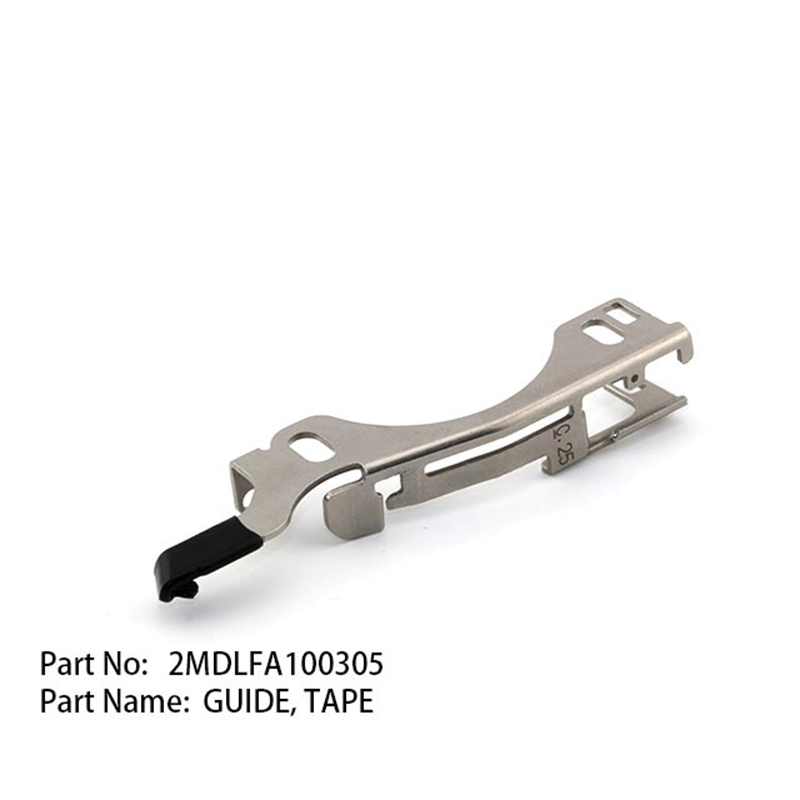
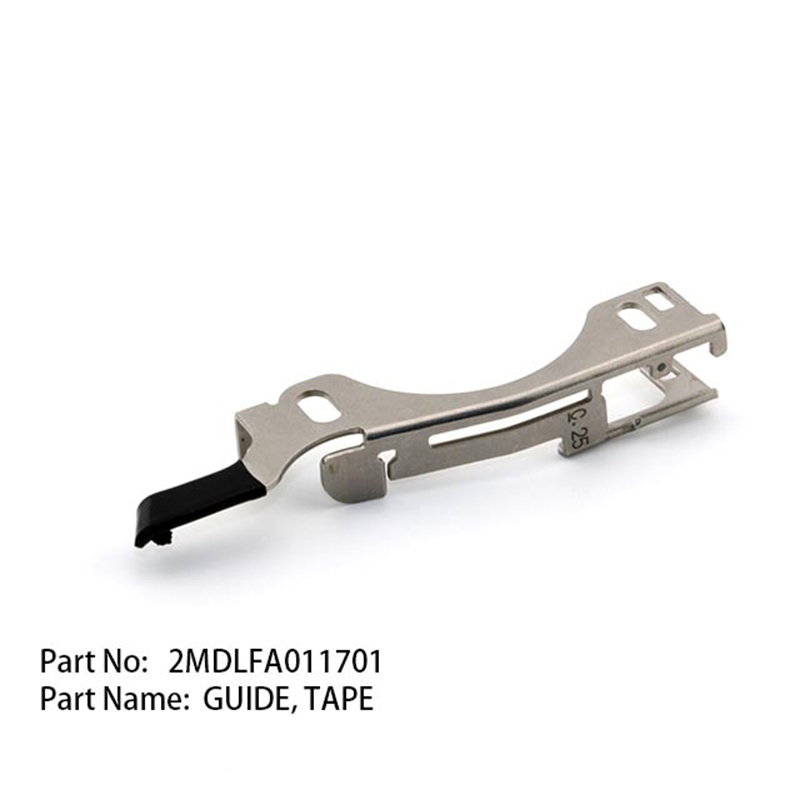
The stability of the mechanical structure design is fundamental. The tape transport system must employ high-rigidity guide rails and precision gear transmission mechanisms to ensure the carrier tape remains horizontal throughout its journey. The guide rails should be made of wear-resistant alloy steel with a polished surface to reduce the coefficient of friction and prevent component misalignment due to carrier tape vibration. Simultaneously, the width of the guide groove must be precisely matched to the carrier tape thickness, and lateral movement space should be eliminated through lateral limiting structures. For micro-components, elastic pressure plates can be added to both sides of the guide rails to fix the carrier tape edges with slight pressure, further suppressing vibration.
The synchronization and precision control of the drive system are crucial. Feeders typically use stepper motors or servo motors as power sources, requiring closed-loop control algorithms to achieve precise matching of the carrier tape advance distance. The meshing depth between the motor-driven gear and the carrier tape teeth needs to be optimized to avoid stepping errors caused by slippage or overload. In high-speed transmission scenarios, the acceleration curves during motor start-up and braking phases need to transition smoothly to prevent inertial forces from causing components to detach from the carrier tape positioning slots. Furthermore, the electric feeder can provide real-time position information via an encoder, calibrating synchronously with the pick-and-place machine's main control system to ensure accurate pickup coordinates for each component.
The compatibility design between the carrier tape and the component needs to be considered in advance. Different package types of components have different requirements for carrier tape structures. For example, small components such as 0201 require deep-cavity carrier tapes to reduce transportation risks by increasing component embedding depth; irregularly shaped components require customized carrier tapes with foolproof structures added within the positioning slots to prevent rotational misalignment. The thermal expansion coefficient of the carrier tape material must match the working environment to avoid dimensional deformation due to temperature changes. For high-value components, an electrostatic coating can be added to the carrier tape surface to reduce positioning interference caused by foreign objects such as dust or hair.
Dynamic monitoring and feedback mechanisms can correct deviations in real time. Deploying photoelectric sensors or vision inspection modules along the transport path enables non-contact monitoring of component positions. When a component deviates from its preset coordinates, the system immediately triggers compensation actions, such as adjusting the nozzle pickup height or correcting the placement head angle. Intelligent feeders, through integrated pressure sensors, monitor changes in carrier tape propulsion resistance, providing early warnings of tape jams or tearing anomalies to prevent component accumulation and displacement due to mechanical failures. Some high-end devices also possess self-learning capabilities, optimizing transport parameters based on historical data to gradually improve stability.
The collaborative design of the tape tearing system affects component exposure accuracy. During carrier tape propulsion, the tearing mechanism must be precisely synchronized with the transport system to ensure the component reaches the pickup point precisely at the moment the tape is peeled off. The tearing angle and tension require repeated adjustments to avoid positioning failures due to tape residue or component lifting. For easily oxidized components, the positioning groove must be immediately purged with inert gas after tearing to prevent oxidation of metal leads from affecting soldering quality. Some feeders employ laser-cut tape technology, reducing mechanical impact through non-contact peeling and further improving component stability.
Environmental control is a hidden but crucial factor. The transmission system must operate in a temperature- and humidity-controlled workshop to prevent carrier belt deformation or static electricity buildup caused by temperature and humidity fluctuations. The feeder casing must be made of anti-static material and connected to the equipment grounding wire to conduct static electricity to the ground. For vibration-sensitive scenarios, shock-absorbing rubber pads can be installed at the bottom of the feeder to isolate external vibration sources. Furthermore, regularly cleaning dust and oil from the transmission path can prevent impurities from getting stuck in gears or guide rails, maintaining long-term stable system operation.
Modular and standardized design improves maintenance efficiency. The feeder should adopt a quick-change structure for flexible deployment across different production lines. Key components such as gears and guide rails should be designed with standardized interfaces to reduce spare parts inventory costs. A digital management platform records the usage time and maintenance records of each feeder, enabling predictive replacement of vulnerable parts and preventing transmission failures caused by component aging. The intelligent feeder can also be remotely diagnosed via IoT technology, allowing engineers to monitor equipment status in real time and intervene in potential risks proactively.